TEL AVIV, Israel (AP) -- Israeli Prime Minister Benjamin Netanyahu's efforts to question last week's election appeared to weaken Sunday as officials said the vote would not be undermined by the allegations and a court ordered suspects in one case released.
In a show of unity, the head of Israel's elections committee appeared alongside the attorney general and the head of the Shin Bet security service in a statement making clear that even if allegations of foreign interference raised last week are substantiated, the election results would stand.
Netanyahu's Likud party has said, without providing evidence, that Arab-led parties "stole" the election, in which Netanyahu's bloc lost its parliamentary majority. By casting doubt on the vote, Netanyahu appears to be trying to block a potential alliance between opposition parties and Arab parties that could force him from office.
Likud has cited a handful of cases, including the arrests of three political activists before polls opened Oct. 27 with envelopes of cash, allegedly intended to bribe voters. Two days later, police arrested four more suspects. Police said the suspects were connected to the Islamist party Ra'am, which denied involvement.
A judge on Sunday questioned or rejected police requests for further restrictions on the three suspects. Police later said one was released under unspecified conditions and another was ordered to remain under house arrest for eight days. The detention of the third suspect was extended for two days.
Mansour Abbas, leader of Ra'am, which won eight seats in the Knesset, denounced the arrests as undemocratic and "an attempt to influence the election results."
Netanyahu's parliamentary bloc fell to 53 seats in the 120-member Knesset, down from a peak of 68 in the outgoing parliament.
A bloc of parties led by his main rival, Gadi Eisenkot, won 48 seats, while Arab-led parties, including Ra'am, won the remaining 19. Together, those two blocs have enough seats to form a government, though it remains unclear whether they will agree to do so.
The results are due to be officially certified this week. President Isaac Herzog is scheduled to begin meeting Wednesday with parties elected to parliament to determine whom they prefer as the next prime minister.
Following those consultations, Herzog will choose the candidate -- most likely Netanyahu or Eisenkot -- whom he believes has the best chance of forming a coalition government.
That would set the stage for weeks of negotiations. If they fail, Herzog could ask another candidate to try. Otherwise, Israel could face another election early next year.
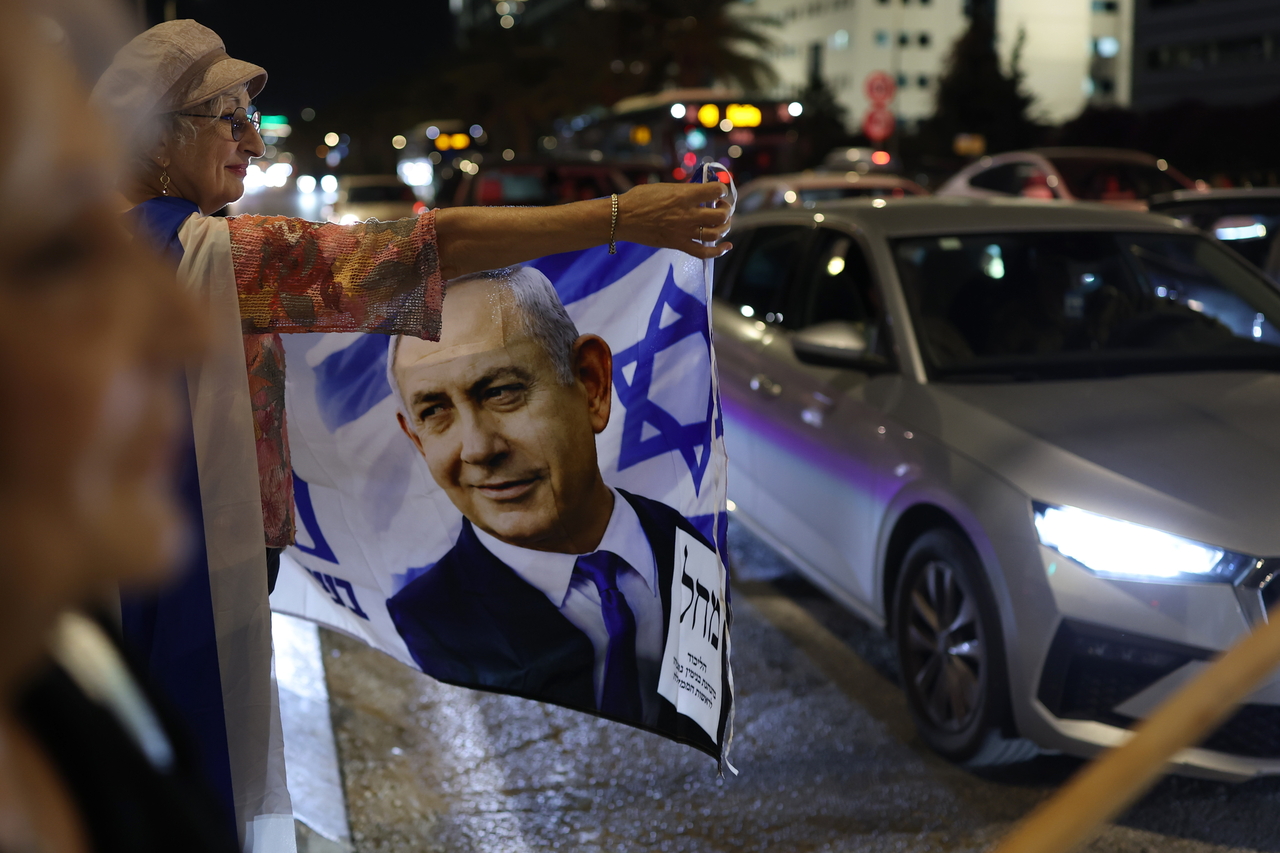
Netanyahu has suggested it would be treasonous for Eisenkot to join with Arab parties. Some Israelis agree. A few dozen people protested outside Eisenkot's home Sunday night.
"We have a tiny country, a very tiny Jewish country. We want to keep it as a Jewish country," said protester Shoshana Idasis.
Other, larger rallies in recent days have called for a Jewish-Arab coalition.
Likud also has alleged foreign interference in the vote. The Shin Bet, at the request of Israel's election commission, has opened an investigation.
But the head of the elections committee, Supreme Court Justice Noam Sohlberg, said that "our position is that even if the suspicions are substantiated, this would not undermine the integrity of the electoral process or the election results as a whole."
Likud quickly issued a statement questioning how the committee chief could acknowledge serious allegations while saying they would not affect the final outcome.
Eisenkot on Sunday accused Netanyahu of launching an "orchestrated and organized campaign to delegitimize the election results" by suggesting Qatar had supported opposition parties to unseat Netanyahu. Eisenkot said Shin Bet had briefed him on the investigation into foreign interference.
Qatar has denied funding activities intended to influence the election's outcome.
Many Israelis see the Gulf Arab country as a patron of Hamas, and allegations of Qatari influence have roiled Israeli politics in other cases, including one in which close aides to Netanyahu allegedly accepted money from Qatar while working for the prime minister's office.
Netanyahu's opponents have accused him of using scare tactics and trying to create a narrative that further discriminates against Arab-led parties and Israel's Arab citizens, who make up about 20% of the population.
Yousef Jabareen, leader of the Joint List of Arab parties, which won 11 seats, said last week that more than half of the content published by Likud and Netanyahu on election day was directed against Arab voters as a tactic to encourage right-wing Israelis to vote.
"In moments of crisis, he reverts to his familiar tactic: racist incitement and the delegitimization of the Arab public," Jabareen said.